
Many patients with chronic illness—especially those dealing with infections, environmental exposures, or persistent stress—develop a similar pattern of symptoms: fatigue, brain fog, digestive issues, and widespread inflammation.
These symptoms often seem unrelated on the surface. But biologically, they may share a common thread: chronic low-grade endotoxemia.
Endotoxemia refers to the presence of endotoxins in the bloodstream. The most important of these is lipopolysaccharide (LPS), a component of the outer membrane of certain gut bacteria (primarily Gram-negative organisms). LPS is not inherently harmful when it stays inside the gut. The problem begins when it crosses into the bloodstream.
When that happens—even in small amounts—the immune system treats it as a threat. This leads to ongoing, low-level inflammation throughout the body.
What Does Chronic Endotoxemia Feel Like?
Unlike acute infections, chronic endotoxemia doesn’t cause dramatic symptoms like high fever or severe illness. Instead, it creates a more subtle but persistent inflammatory state.
Patients often experience:
- Cognitive symptoms such as brain fog, difficulty concentrating, or memory issues
- Persistent fatigue that is not relieved by rest
- Diffuse joint and muscle pain
- Digestive symptoms like bloating, food sensitivities, or irregular bowel habits
- Metabolic changes, including weight gain or insulin resistance
These symptoms may seem unrelated, but they reflect the wide-reaching effects of chronic immune activation.
From a biological standpoint, this is driven largely by LPS activating a receptor called Toll-like receptor 4 (TLR4). This receptor is part of the innate immune system—the body’s first line of defense. When repeatedly stimulated, it leads to ongoing production of inflammatory signaling molecules (cytokines), which can affect the brain, muscles, metabolism, and gut.
How Does Endotoxemia Develop?
For endotoxemia to occur, two things have to happen at the same time:
First, there needs to be an increased amount of endotoxin in the gut.
Second, the intestinal barrier must become more permeable, allowing those endotoxins to pass into the bloodstream.
These two processes are commonly referred to as dysbiosis and “leaky gut.”
Dysbiosis: An Imbalanced Microbiome
The gut contains trillions of bacteria. In a healthy state, there is a balance between different types of organisms, including beneficial bacteria that help maintain the integrity of the gut lining.
In dysbiosis, this balance shifts. There may be:
- An increase in Gram-negative bacteria (which produce LPS)
- A decrease in beneficial bacteria, particularly those that produce butyrate, a short-chain fatty acid that helps nourish and maintain the intestinal lining
This creates a situation where there is simply more endotoxin present in the gut environment.
“Leaky Gut”: Increased Intestinal Permeability
The lining of the intestine is designed to act as a barrier. It allows nutrients to pass through while keeping bacteria and toxins contained.
This barrier is held together by structures called tight junctions, which function like seals between cells.
Under certain conditions, these tight junctions become disrupted. When that happens, the barrier becomes more permeable—often referred to as “leaky gut.”
This allows substances like LPS to pass from the gut into circulation.
Several factors can weaken this barrier:
- Inflammatory cytokines (such as TNF-α and IL-6)
- Stress-related signaling through the nervous system
- Loss of beneficial bacteria that support barrier integrity
Once both dysbiosis and increased permeability are present, endotoxemia becomes much more likely.
How IACIRS Creates the Conditions for Endotoxemia
In infection-associated chronic inflammatory response syndromes (IACIRS), multiple upstream stressors converge on the gut. These can be thought of as a root cause triad: biotoxins, chronic infections, and nervous system dysregulation.
Each of these plays a role in weakening the gut barrier and disrupting the microbiome.
Biotoxins and Fungal Burden
Environmental toxins—particularly mycotoxins from mold exposure—have been shown to directly affect the gut lining.
Certain mycotoxins can:
- Damage the cells that line the intestine
- Disrupt tight junction proteins
- Increase oxidative stress within the gut
At the same time, fungal overgrowth within the gut—such as Candida albicans—can further destabilize the microbial ecosystem. Fungi interact with bacteria and the immune system in complex ways that can amplify inflammation and contribute to barrier dysfunction.
The net effect is a gut environment that is both more inflamed and more permeable, increasing the likelihood that endotoxins will enter circulation.
Stress and the Nervous System
Chronic stress has a direct and measurable impact on the gut.
When the body is in a sustained “fight-or-flight” state, several things happen:
- The stress hormone signaling pathway (including CRH) becomes activated
- Mast cells in the gut lining release inflammatory mediators
- Blood flow and motility in the gut are altered
These changes weaken the integrity of the gut barrier.
In addition, reduced activity of the vagus nerve—which normally helps regulate digestion and inflammation—further compromises gut function.
This makes stress not just a contributing factor, but a central driver of intestinal permeability.
Chronic Infections as System Disruptors
Vector-borne infections such as Borrelia burgdorferi (Lyme), Bartonella, and Babesia do not directly produce large amounts of endotoxin in the way some bacteria do. However, they can still play a significant role in setting the stage for endotoxemia.
These infections affect the body in several key ways.
They promote chronic immune activation, leading to sustained production of inflammatory cytokines. These cytokines are known to weaken tight junctions in the gut.
They are also associated with autonomic nervous system dysfunction, which can impair gut motility and blood flow—both of which are necessary for maintaining a healthy intestinal lining.
There is also growing recognition that chronic infections can influence the composition of the gut microbiome, reducing diversity and favoring organisms that contribute to inflammation.
Finally, many patients develop mast cell activation, which directly increases intestinal permeability.
Taken together, these effects do not directly cause endotoxemia—but they create the biological conditions that make it far more likely to occur.
Treatment: Addressing Endotoxemia Directly
While treating the underlying drivers—such as infections, toxins, and stress—is essential, many patients benefit from also targeting the downstream effects on the gut.
Diet
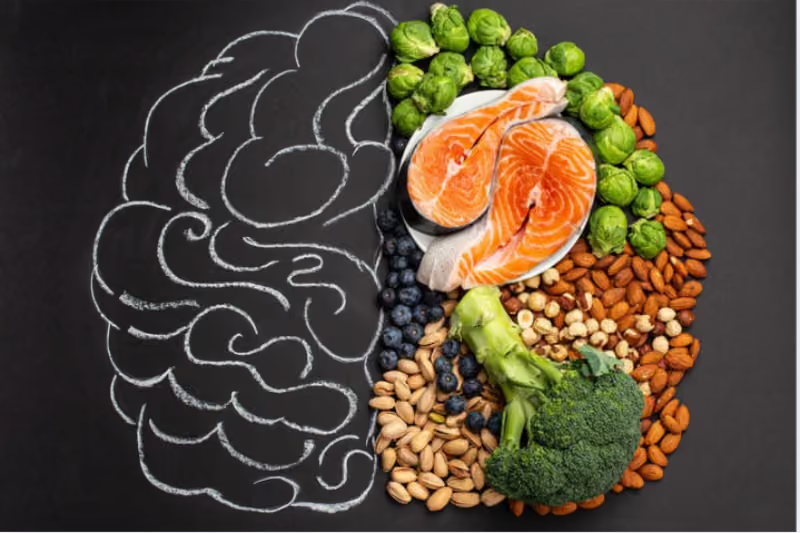
Diet plays a major role in shaping both the microbiome and the integrity of the gut barrier.
Diets rich in fiber and plant-based compounds (polyphenols) support beneficial bacteria and promote the production of butyrate, which strengthens the intestinal lining.
In contrast, diets high in ultra-processed foods and saturated fats can increase endotoxin absorption. Fat, in particular, can facilitate the transport of LPS across the gut lining via chylomicrons (lipid transport particles), which helps explain why endotoxin levels can rise after certain meals.
Probiotics
Probiotics can help rebalance the microbiome, although their effects are highly dependent on the specific strains used.
Traditional strains such as Lactobacillus rhamnosus GG and Bifidobacterium longum have been shown to support immune regulation and gut barrier function.
Spore-based probiotics (typically Bacillus species) are more resistant to digestion and may help reduce endotoxin levels after meals. While promising, the evidence is still limited, and they should not be viewed as universally superior.
Supporting the Gut Barrier
Certain nutrients may help repair and maintain the intestinal lining.
Glutamine serves as a primary fuel source for intestinal cells. Zinc plays a role in maintaining tight junction integrity. Butyrate, whether produced through diet or supplemented directly, helps nourish the cells lining the colon and supports barrier function.
Reducing Endotoxin Burden
Some clinicians use agents designed to bind toxins within the gut.
Activated charcoal is one example. It acts as a nonspecific adsorbent, binding various compounds and potentially reducing their absorption. While widely used in clinical settings, the evidence for its role in chronic endotoxemia is limited, and its use should be individualized.
Final Perspective
Chronic endotoxemia is unlikely to be the sole cause of complex chronic illness. However, it may represent a key downstream pathway through which multiple upstream stressors—biotoxins, infections, and chronic stress—converge to drive inflammation.
By addressing not only the root causes but also the gut environment itself, it may be possible to reduce this inflammatory burden and improve a wide range of symptoms.