

If you've been living with complex chronic illness, you've likely tried many different treatments—often without lasting results.
The problem is rarely a lack of effort. More often, important root causes have been missed, or treatments have been introduced too quickly, making it difficult to know what's helping, what's causing side effects, or what your body is truly ready to tolerate.
Over the years, I've found that patients tend to make the greatest progress when treatment is both comprehensive and thoughtfully layered.
The goal is not to find one "magic bullet."
The goal is to identify the major root causes contributing to illness and gradually build a comprehensive, individualized treatment plan that addresses them together.
Understanding the Root Cause Triad
At the center of our approach at the Restorative Medicine Center is what we call the Root Cause Triad. It includes three major factors that can contribute to complex chronic illness:
- Nervous system dysregulation
- Microbes
- Toxins
These are not isolated problems. They interact continuously and can amplify one another.
Chronic infections can generate toxins. Environmental toxins can impair immune function and detoxification. Chronic nervous system dysregulation can affect digestion, sleep, immune regulation, hormone balance, and the body's ability to repair itself.
Together, these factors can create a self-reinforcing cycle of inflammation and impaired healing. Because they are so interconnected, lasting improvement often requires addressing all three as part of a coordinated treatment strategy.
Every Treatment Plan Is Individualized
While the Root Cause Triad provides the framework for understanding complex chronic illness, the specific root causes contributing to symptoms are different for every patient. This is why treatment begins with a comprehensive root cause analysis rather than a predetermined protocol.
The initial evaluation combines a detailed history, physical examination, and targeted laboratory testing to identify the root causes and related imbalances that may be contributing to each patient's symptoms.
Depending on the individual, this may include vector-borne infections, fungal overgrowth, mycotoxin exposure, nervous system dysregulation, nutritional deficiencies, methylation abnormalities, immune dysfunction, hormone imbalances, or other contributing factors.
This initial root cause analysis helps us understand what is contributing to your symptoms and, therefore, what needs to be addressed in your treatment plan.
Once we know what needs to be treated, the next question is how to build the plan.
Rather than introducing every therapy at once, we gradually add one new treatment layer at a time. This allows us to understand how each intervention affects your body, improve treatment tolerance, identify side effects or symptom flares early, and make thoughtful adjustments before introducing the next layer.
Importantly, earlier layers remain in place. Over time, your treatment evolves into a coordinated, comprehensive program in which multiple root causes are being addressed simultaneously.
The illustration below shows how root cause analysis determines WHAT we treat, while layering determines HOW we build your individualized treatment plan.
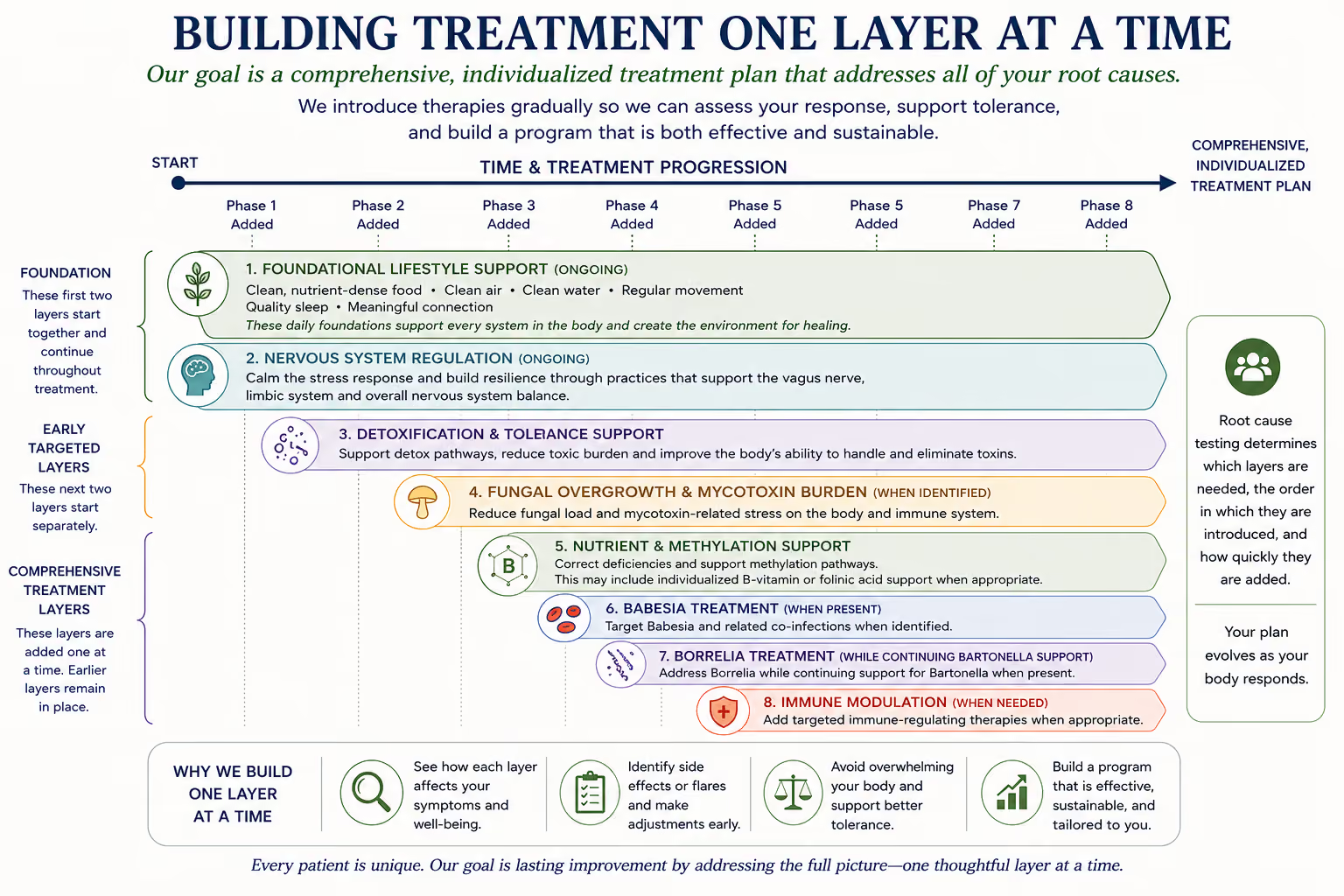
The sections below explain each treatment layer and how it contributes to the comprehensive treatment plan.
Layer 1: Foundational Lifestyle Support
Creating the Environment for Healing
Healing doesn't begin with supplements or medications. It begins by creating an internal environment where the body is actually capable of repairing itself.
This foundation includes clean, nutrient-dense food, clean air, clean water, restorative sleep, regular movement, meaningful relationships, and other daily habits that reduce inflammation and support normal cellular function.
These foundational habits influence nearly every system in the body, including mitochondrial function, immune regulation, detoxification, hormone balance, and resilience.
Unlike many treatments, this layer is never "completed." It continues throughout your healing journey and strengthens every treatment that follows.
Layer 2: Nervous System Regulation
Shifting the Body from Protection to Repair
The second foundational layer begins at the same time.
Many people with complex chronic illness remain stuck in a chronic fight-or-flight response. When the nervous system perceives ongoing danger, the body naturally shifts resources away from healing and toward survival.
Through individualized approaches such as breathwork, vagal nerve stimulation, limbic system retraining, mindfulness practices, counseling, and other nervous system therapies, we work to help your body transition from a state of protection toward one that is more capable of repair.
Like the lifestyle foundation, this layer continues throughout treatment and supports every other intervention.
Layer 3: Detoxification & Tolerance Support
Improving the Body's Ability to Clear Toxins
In complex chronic illness, downstream immune dysfunction and inflammation are often driven in large part by biotoxins and mycotoxins. These toxins may come from environmental exposures or be generated within the body by microbial and fungal organisms. Improving the body's ability to clear them is therefore an important early step in reducing inflammatory burden, supporting healthier immune function, and preparing the body for the treatment layers that follow.
We use a variety of individualized strategies to support the body's natural toxin-clearing pathways. These may include binders to help remove toxins through the gastrointestinal tract, sauna to promote sweating, lymphatic drainage techniques and movement to support circulation and lymphatic flow, and targeted support for liver and kidney function.
By improving toxin clearance early in treatment, we can help reduce the overall burden on the body while continuing to address the root causes producing or contributing to that burden.
Layer 4: Fungal Overgrowth - When Present
Reducing Fungal Burden
Fungal overgrowth can be an important contributor to complex chronic illness. Candida and Aspergillus are the primary fungal organisms we identify and treat and may become established following environmental exposure or when immune function is compromised.
Once established, fungal organisms can produce mycotoxins and other inflammatory compounds that further impair immune function, creating a cycle that allows fungal overgrowth to persist and can make other root-cause infections more difficult to treat.
When identified, we typically address fungal overgrowth early in the treatment process. We often begin with prescription antifungal medications to reduce the initial burden, followed by herbal antifungals for longer-term suppression and maintenance.
Layer 5: Nutrient & Methylation Support
Restoring Nutrients & Supporting Methylation
Once fungal overgrowth is under control, we begin adding targeted nutritional and methylation support. B vitamins are generally introduced at this stage because they can sometimes worsen fungal overgrowth when added too early.
B-vitamin selection is individualized based on MTHFR genetics, laboratory findings, and each patient's response. Doses are introduced gradually and adjusted as tolerated, with blood levels monitored to ensure we are providing enough support without over-supplementing.
Additional vitamins, minerals, amino acids, mitochondrial support, and folinic acid may also be added based on individual needs.
Layer 6: Babesia Treatment - When Present
Addressing a Key Barrier to Treatment
Babesia is a parasite, rather than a bacterium, and requires targeted antiparasitic treatment to adequately address the infection.
Babesia may also affect how efficiently the liver processes certain medications. Experimental studies suggest that infection can reduce the activity of liver enzymes responsible for breaking down many medications, which may increase medication exposure and make treatment more difficult to tolerate.
For this reason, patients with a significant Babesia burden often need to start with lower medication doses and increase them more slowly. As the infection clears, medication tolerance frequently improves and the need to go "low and slow" often decreases.
Layer 7: Borrelia & Bartonella Treatment - When Present
Targeting Additional Persistent Vector-Borne Infections
When testing identifies Borrelia and/or Bartonella, treatment expands to address these infections using an individualized combination of prescription medications, herbal therapies, and supportive treatments when appropriate.
Because Borrelia and Bartonella often respond to many of the same antimicrobial strategies, they are frequently treated together while the foundational treatment layers continue supporting immune function, detoxification, and overall resilience.
Although this general progression has consistently worked well in our clinical experience, every treatment plan remains individualized according to each patient's root causes, laboratory findings, treatment tolerance, and clinical response.
Layer 8: Immune Modulation - If Needed
Restoring Healthy Immune Balance
For some patients, additional immune-modulating therapies become appropriate after the primary root causes have been addressed.
These therapies are highly individualized and are selected based on each patient's immune profile and HLA type. Their purpose is to help restore healthy immune regulation rather than simply suppress symptoms.
Why We Build Treatment This Way
Introducing one new treatment layer at a time allows us to understand how your body responds, identify side effects or symptom flares early, and make thoughtful adjustments before introducing the next therapy.
This approach also reduces the likelihood of overwhelming an already stressed system while helping us determine which interventions provide the greatest benefit for you as an individual.
Although treatments are introduced gradually, the goal is never to treat one problem in isolation.
The goal is to steadily build a coordinated treatment program that addresses all of the major root causes contributing to illness.
By the time treatment is fully developed, multiple treatment layers are working together simultaneously to support lasting recovery.
What to Expect
Healing from complex chronic illness is rarely linear.
There will be periods of steady improvement, times when treatment requires adjustment, and occasions when new root causes become more apparent as others improve. This is often a normal part of the healing process rather than a sign that treatment is failing.
As additional treatment layers are added and your overall burden decreases, resilience often improves, symptom flares become less frequent, and recovery becomes increasingly sustainable.
Patience is important. Healing is not about finding one perfect treatment. It is about thoughtfully building the right combination of treatments for your unique biology.
Final Thoughts
Complex chronic illness can feel overwhelming, especially when symptoms continue to accumulate and treatments seem disconnected from one another. A root cause approach provides a different path forward: identify what is driving illness, understand how those factors interact, and build treatment around what your individual body needs.
The process takes time. Each layer is introduced thoughtfully, while the layers that are helping remain in place. Gradually, what begins as a series of individual interventions becomes a coordinated, comprehensive treatment plan addressing multiple root causes simultaneously.
Just as importantly, we want you to understand the reasoning behind that plan. Knowing what we are treating, why we are treating it, and where each step fits into the bigger picture can make a complicated healing process feel more understandable and manageable.
There may not be one "magic bullet" for complex chronic illness—but there can be a clear roadmap forward.