

How IACIRS Can Lead to MCAS, hEDS, and POTS
Many people who develop Mast Cell Activation Syndrome (MCAS), hypermobile Ehlers-Danlos Syndrome (hEDS), or Postural Orthostatic Tachycardia Syndrome (POTS) are told these are separate, unrelated conditions.
In reality, they often reflect different expressions of the same root imbalance—an immune system that’s lost its internal rhythm after exposure to infections, toxins, or both.
That pattern—known as IACIRS (Infection-Associated Chronic Inflammatory Response Syndrome)—creates a cascade that can ripple through nearly every system in the body.
Act I · IACIRS — The Upstream Immune Imbalance
The immune system’s job is to recognize danger, neutralize it, and then stand down.
When it’s exposed to stealth infections or biotoxins it can’t easily clear—such as Borrelia, Bartonella, Babesia, Aspergillus, or Candida—its signaling becomes confused.
Instead of being “overactive,” the immune system becomes imbalanced.
Some pathways stay switched on, others shut down, and the result is miscommunication rather than simple inflammation.
Over time, this imbalance affects detox pathways, hormones, and even the nervous system. Among the most sensitive responders are mast cells—the immune system’s first responders.
Root Cause Insight
IACIRS isn’t chronic inflammation—it’s chronic confusion.
The immune system keeps receiving mixed messages from infections, toxins, or stressors, and downstream systems pay the price.
Act II · Mast Cell Activation — A Common Downstream Consequence
Mast cells sit in connective tissue throughout the body—skin, gut, blood vessels, nerves—ready to release histamine and other chemical messengers when danger appears.
In IACIRS, chronic immune confusion keeps them on edge, and they begin releasing those chemicals in response to everyday triggers like foods, smells, or stress.
That’s Mast Cell Activation Syndrome (MCAS)—the body’s alarm system stuck between “on” and “off.”
Not everyone with IACIRS experiences MCAS to the same degree. It’s one version of downstream immune dysfunction, shaped by each person’s triggers (microbial, toxic, or stress-related) and genetic tendencies.
When it does occur, it amplifies inflammation and sets the stage for connective-tissue and circulatory changes.
Clinical Connection
Mast-cell activation can manifest as hives, flushing, gut pain, or chemical sensitivities—but it’s also a tissue-level process that quietly erodes collagen and vascular stability over time.
Act III · Collagen Breakdown and Connective-Tissue Instability (hEDS)
Mast cells live alongside collagen fibers, the scaffolding that gives structure to joints, skin, and blood vessels.
When they remain overactivated, they release enzymes that gradually weaken collagen and increase tissue fragility.
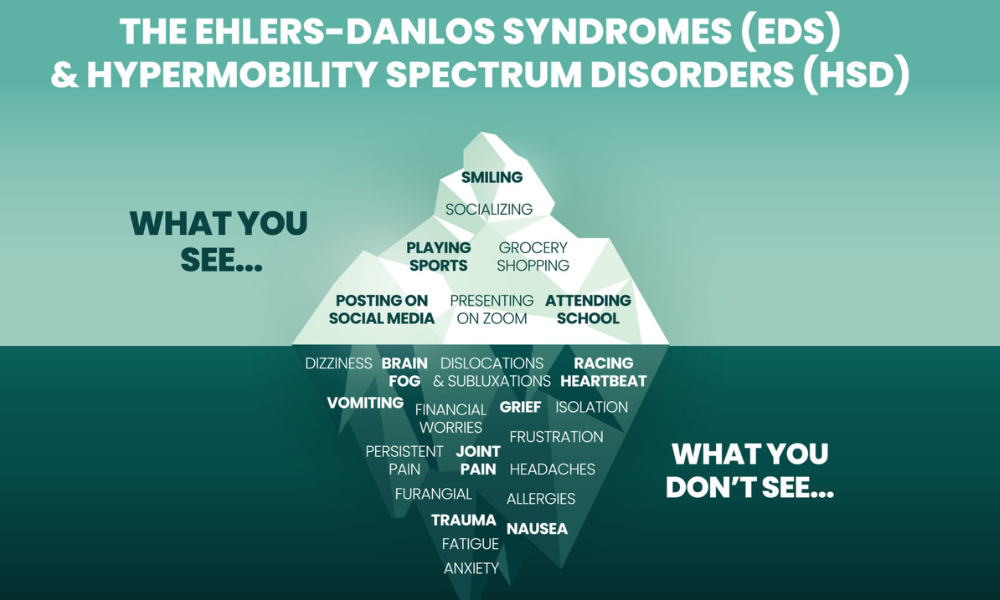
The result looks like hypermobile Ehlers-Danlos Syndrome (hEDS)—loose joints, easy bruising, and soft, stretchy skin.
While classical EDS is genetic, most hEDS cases are secondary, developing over time as chronic immune and mast-cell signaling erodes collagen strength.
Act IV · Circulatory Instability and Autonomic Dysfunction (POTS)
Weakened connective tissue means weakened blood-vessel tone. The autonomic nervous system compensates by speeding the heart to maintain blood flow—a hallmark of Postural Orthostatic Tachycardia Syndrome (POTS).
In IACIRS, inflammation can also interfere with ADH (antidiuretic hormone) in the kidneys, leading to abnormal fluid distribution and worsening orthostatic symptoms.
That’s why electrolyte hydration, not just plain water, often provides relief—it temporarily restores balance while deeper repair takes place.
Root Cause Insight
IACIRS doesn’t only affect the immune system—it alters how the body handles water, salt, and circulation.
Addressing hydration is supportive; fixing immune imbalance is corrective.
Putting It All Together
Working Upstream
Treating each label in isolation can bring partial relief but rarely lasting recovery.
Antihistamines calm MCAS, collagen support helps hEDS, and salt or compression aids POTS—but none correct the upstream immune confusion driving them all.
Healing begins when we address the root triggers of IACIRS—clearing infections, reducing toxic load, regulating stress physiology, and restoring immune balance.
Once that upstream work begins, mast cells settle, collagen rebuilds, and circulation steadies.
The Takeaway
These conditions aren’t separate mysteries—they’re steps in the same chain:
IACIRS → Mast Cell Activation → Collagen Breakdown → Loss of Vascular Tone
When infections or toxins trigger immune imbalance, mast cells stay overactive. Over time, their signaling weakens collagen, loosens blood-vessel tone, and produces the overlapping features of MCAS, hEDS, and POTS.
The path forward isn’t to chase each diagnosis—it’s to uncover and correct the upstream causes of IACIRS.
When that happens, the immune system resets, mast cells quiet, and downstream healing naturally follows.